Rectangular VAV Terminal Units
SDS
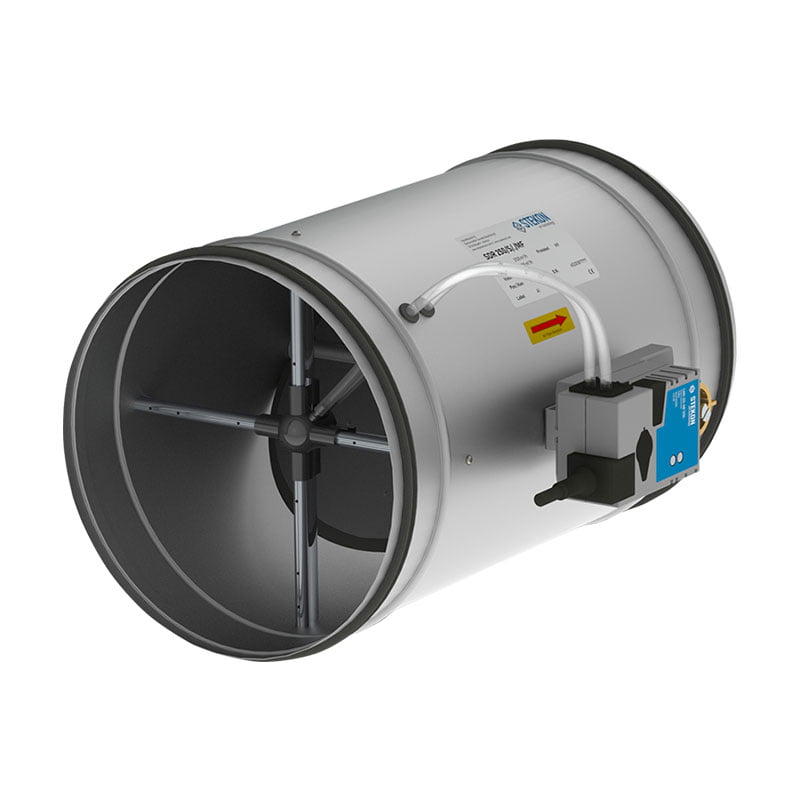
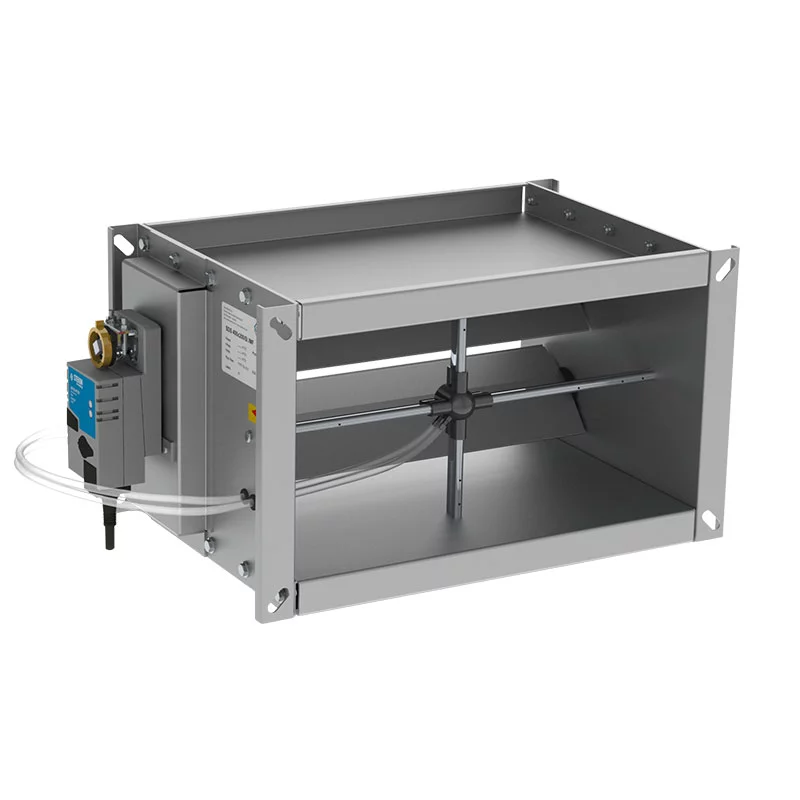
STEKON SDS adjusts the conditioned air flow rate sent to the room based on data received from the thermostat or building automation system, ensuring minimal pressure drop and low noise levels. Thanks to the air flow sensor inside the unit, it detects instantaneous air changes and positions the damper to allow the desired air flow rate independently of pressure.
The VAV Unit, by adjusting the air flow rate based on signals received from local or central systems according to changing conditions in the served environment, such as the number of occupants or cooling requirements, not only ensures good air quality but also prevents excessive ventilation.
The SDS Rectangular VAV Terminal Unit provides precise flow rate adjustment by measuring the air flow velocity at accurate points across the entire cross-section and averaging these measurements.

With Smartstep Selection, you can quickly and easily make all product selections and print the technical outputs of your projects with a single click.
Catalogues & Tools
What are VAV Terminal Units? | Efficient and Customizable HVAC Solution
Advantages of VAV Terminal Units:
Energy Efficiency: By regulating airflow according to room needs, VAV systems minimize energy consumption, making them ideal for large areas or buildings with variable occupancy rates.
Enhanced Comfort Control: VAV units allow for independent temperature control in different zones, ensuring optimal indoor comfort for all occupants.
Quiet Operation: VAV terminal units operate at low noise levels, providing a peaceful environment while eliminating noise from the HVAC system.
Flexible Design: Available in various sizes and configurations, VAV units can be customized for individual rooms or larger, multi-zone buildings.
Easy Installation and Maintenance: Thanks to their modular design, VAV units simplify installation and long-term maintenance operations.
How Do VAV Terminal Units Work?
Common Applications of VAV Terminal Units:
Office Buildings
Hospitals
Hotels
Shopping Malls
Educational Institutions
Airports
Industrial Facilities
VAV vs. CAV (Constant Air Volume) Systems:
Air Distribution: CAV systems provide a constant airflow regardless of temperature changes. VAV systems, on the other hand, adjust airflow according to real-time needs.
Energy Consumption: VAV terminal units are more energy-efficient compared to CAV systems by supplying only the necessary amount of air.
User Comfort: With VAV units, comfort levels can be independently adjusted in different parts of the building, ensuring optimal comfort in every area.
Types of VAV Terminal Units:
Single-Duct VAV Units: These units regulate airflow through a single duct and are commonly used for both cooling and heating in commercial buildings.
Fan-Powered VAV Units: These units feature a small fan that improves air circulation within the space, thereby enhancing air distribution and comfort.
Dual-Duct VAV Units: With two separate ducts for hot and cold air, these units are ideal for areas requiring precise temperature control.
Considerations When Choosing VAV Terminal Units:
Room Size and HVAC Requirements: The correct capacity VAV unit should be selected based on the room size and ventilation needs.
Energy Efficiency: Units with high energy efficiency should be preferred to reduce long-term energy costs.
Installation and Maintenance Requirements: Units that are easy to install and have low maintenance requirements reduce operational downtime and maintenance costs.
Noise Levels: In environments requiring quietness, such as hospitals and offices, VAV terminal units with low noise levels should be preferred.
Cost Savings: Reduced energy bills thanks to optimized air distribution and minimized energy waste.
Flexibility: Whether it's a single room or a large building, VAV systems can be easily scaled for any project.
Sustainability: VAV terminal units support environmentally friendly building standards by reducing the overall carbon footprint of HVAC systems.
Precision: Provides precise temperature control in different zones, increasing comfort and optimizing efficiency.
Why Should You Choose VAV Terminal Units for Your Project?
How Do VAV Terminal Units Work?
VAV terminal units control air distribution with data from temperature sensors. When a room requires heating or cooling, the VAV unit adjusts its dampers to increase or decrease the supplied air volume, thereby providing precise temperature control. This flexible structure is particularly effective in large buildings where different areas have varying environmental conditions.